14 Low- and No-Cost Energy Wins That Deliver Real Results (BOMA 2026)

Energy conservation isn’t always about a new chiller or a top-of-the-line software investment. Sometimes it’s about simple fixes—the behavioral measures or smaller retrofits that can deliver outsized savings on energy and money.
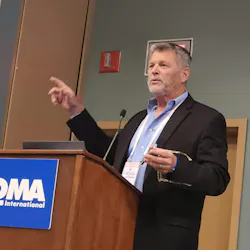
A panel at the 2026 BOMA International Conference & Expo shared 14 top tips on cutting energy use. The panel featured:
- Moderator Bill Muehling, group engineering manager for Cousins Properties in Tampa
- Suresh Balgobind, senior chief engineer, Cushman & Wakefield
- Matt Montanez, regional engineering manager, Northern California, for UG2
- Ryan Wilcoxen, senior chief engineer for JLL
“For energy conservation, you need to have a plan,” Balgobind said. “You need to have a playbook to improve efficiency.” Their tips can become the beginning of your energy reduction playbook.
1. Do an Energy Audit
Do you have a facility manager or engineer go by the building at night to see what lights are still on or whether the HVAC is still acting like the building is occupied? The answers to those questions may surprise you. You can also look at building automation system (BAS) data to see what’s running and when. As the old saying goes, “You can’t manage what you don’t measure”—so measure it.
2. Adjust Setpoints
Instead of having chilled water delivered at 42 degrees, bring the setpoint up to 43 or 44 degrees, Balgobind suggested: “One or two degrees will help you save a lot of energy.”
3. Check Overrides
How many tenants are overriding your building’s setpoints for heating and cooling, and who is doing that? Revert the setpoints and schedules back to what they should be. If occupants really need to adjust the temperature, give them a small temperature band, such as plus or minus 2 degrees from the setpoint.
4. Watch the Humidity
Free cooling can be a great way to save energy, but only if the humidity is low. When it’s especially humid, you need to start backing off on fresh air, Balgobind said. AI-enabled building automation systems can help make this adjustment for you.
5. Maintain Your Equipment
Periodically, clean your economizer’s dampers and make sure they’re working properly. Keep up with recommended maintenance schedules for HVAC and other equipment too—well-maintained equipment operates more efficiently. Sensors need to be recalibrated periodically.
“Maintenance is our bread and butter,” Montanez said. “It gets the most out of your equipment. Has anyone tried to ride a bicycle with the air low in the tires? It’s not fun. Bad maintenance curates more waste, so stay on top of it.”
6. Use Certifications as a Roadmap
Start by pursuing ENERGY STAR, or if your building already has an ENERGY STAR rating, work to improve it, Balgobind urged. From there, you can springboard to WELL, LEED, Fitwel, or other certifications.
7. Educate Occupants
Encourage your tenants and their employees to do things like turning off lights and enabling sleep mode on equipment. Using automatic sleep settings on office devices can reduce plug load energy consumption by around 40%, according to the panel. Try implementing visual cues and digital messages, such as a dashboard that shows how much energy occupants are saving. Make it encouraging.
8. Make Strategic Upgrades
Add variable frequency drives (VFDs) to any motors possible, the panel said. Implement zoned HVAC controls if you haven’t done so already—it helps you avoid conditioning unused spaces. Any remaining T8s or T12s should be replaced with LEDs, preferably coupled with lighting controls and sensors that allow them to shut on and off automatically. Vending misers implemented into vending machines save energy by powering down lighting and compressors during non-operating hours and can reduce the energy consumption of your vending machines by nearly 50%.
9. Implement Day Cleaning Programs
Shifting janitorial work to the daytime in offices reduces after-hours use of lighting and HVAC. You don’t need to keep your lights on in the middle of the night for a couple of people to clean a space.
10. Don’t Replace Like with Like
“Too often we fall into the trap of like-for-like replacements,” Muehling said. “If you’re going through a chiller replacement or an air handler replacement, evaluate what’s better for you from an energy perspective.” This may spark an internal battle as you try to justify the higher cost of the more efficient equipment, Muehling noted. However, if you can prove the ROI, you may be able to get the higher upfront cost approved.
11. Enable Remote Monitoring
This strategy helps detect faults early and prevent energy waste with timely alerts to facility teams. If something goes haywire in the middle of the night, your team will know about it.
12. Quantify the Savings
Make sure everyone, from your stakeholders to your facility engineers, understand the financial value of conservation measures. Adopt a sales mindset so your management or ownership has the information they need to invest in further energy-saving improvements.
“Find a way to show and sell,” Montanez said. “You’re not only doing what’s right for the environment, but that money goes straight into the building—straight into attracting tenants and retaining tenants. It is a fight to get people back in seats. Someone looking to lease space has never had more options. Being able to have real, tangible financial benefits as to why they should be with you and not your neighboring building is a direct result of understanding these cost benefits due to these changes.”
13. Make an Action Plan
Emphasize audits, sensor calibration, and fixing obvious inefficiencies should be your focus for the first 30 days of your plan, the panel said. “If you’re fortunate to have an engineering team, challenge them. Get them to talk together,” Montanez said. “Throw ideas at the wall and see what sticks. You need to start somewhere.” Your plan can emphasize low- and no-cost items to start, such as checking calibration and sensors or cleaning HVAC coils.
By day 60, optimize your automation system’s schedules and reset pressures. Align HVAC with occupancy trends. Get granular into your system’s settings, Montanez said.
By 90 days, you can incorporate dashboards, measurement verification, and monthly audits to ensure you can maintain your performance over the long term. “Follow up, test, retry, follow up,” Montanez said. “It’s a never-ending commitment to be the best at your job at the end of the day.”
14. Maintain Continuous Improvement
“Your building is alive. It’s constantly changing,” Montanez said. “The demographic is changing. The use is changing. Continually always take a fresh look and reevaluate what’s working, what’s not, and really stay on top of it so you don’t fall asleep at the wheel.”
Keep asking questions, Muehling urged. “The most dangerous thing to hear from any engineer is, ‘That’s the way we’ve always done it,’” he said.
About the Author
 Janelle Penny
Janelle Penny
Editor-in-Chief at BUILDINGS
Janelle Penny has been with BUILDINGS since 2010. She is a two-time FOLIO: Eddie award winner who aims to deliver practical, actionable content for building owners and facilities professionals.